
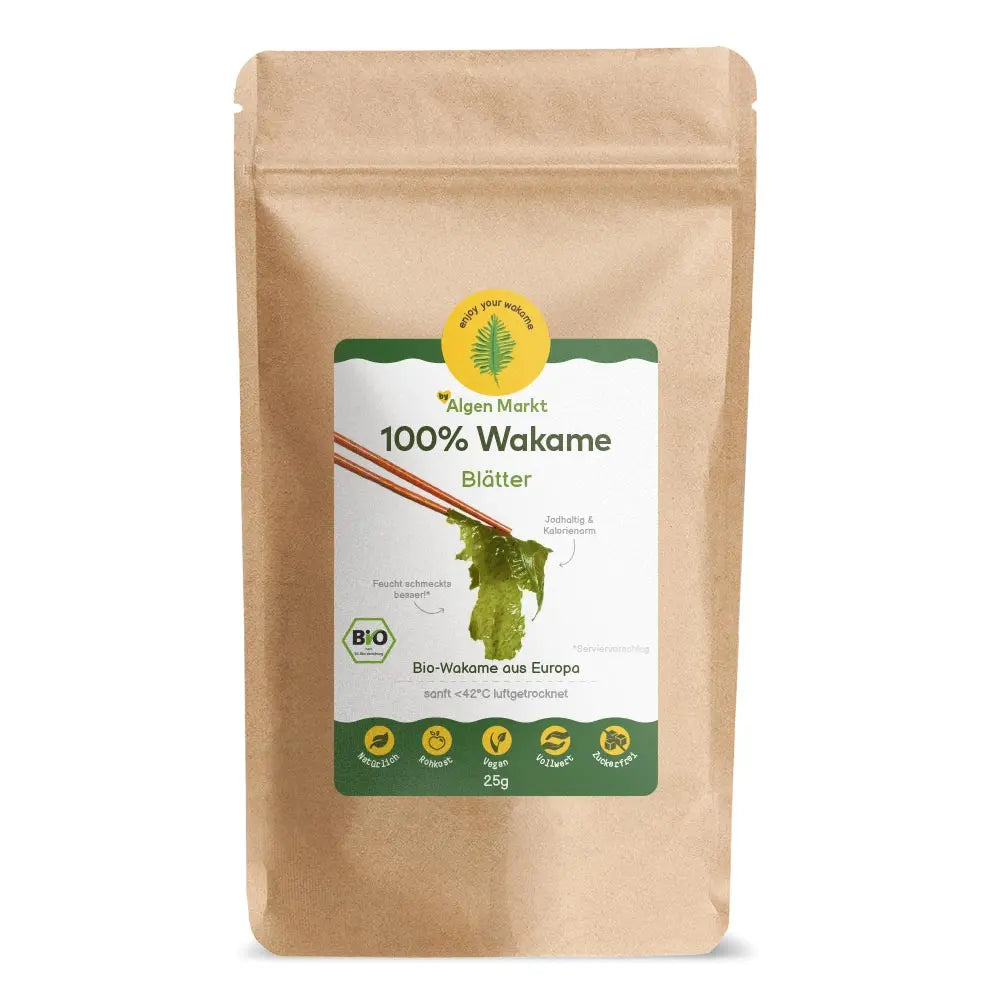
Wakame leaves
Wakame leaves
Regular price
5,00 €
Sale price
5,00 €
Regular price
Unit price
200,00 €
per
kg
Tax included.
Shipping calculated at checkout.
-
 Gently air-dried at max. 42 °C
-
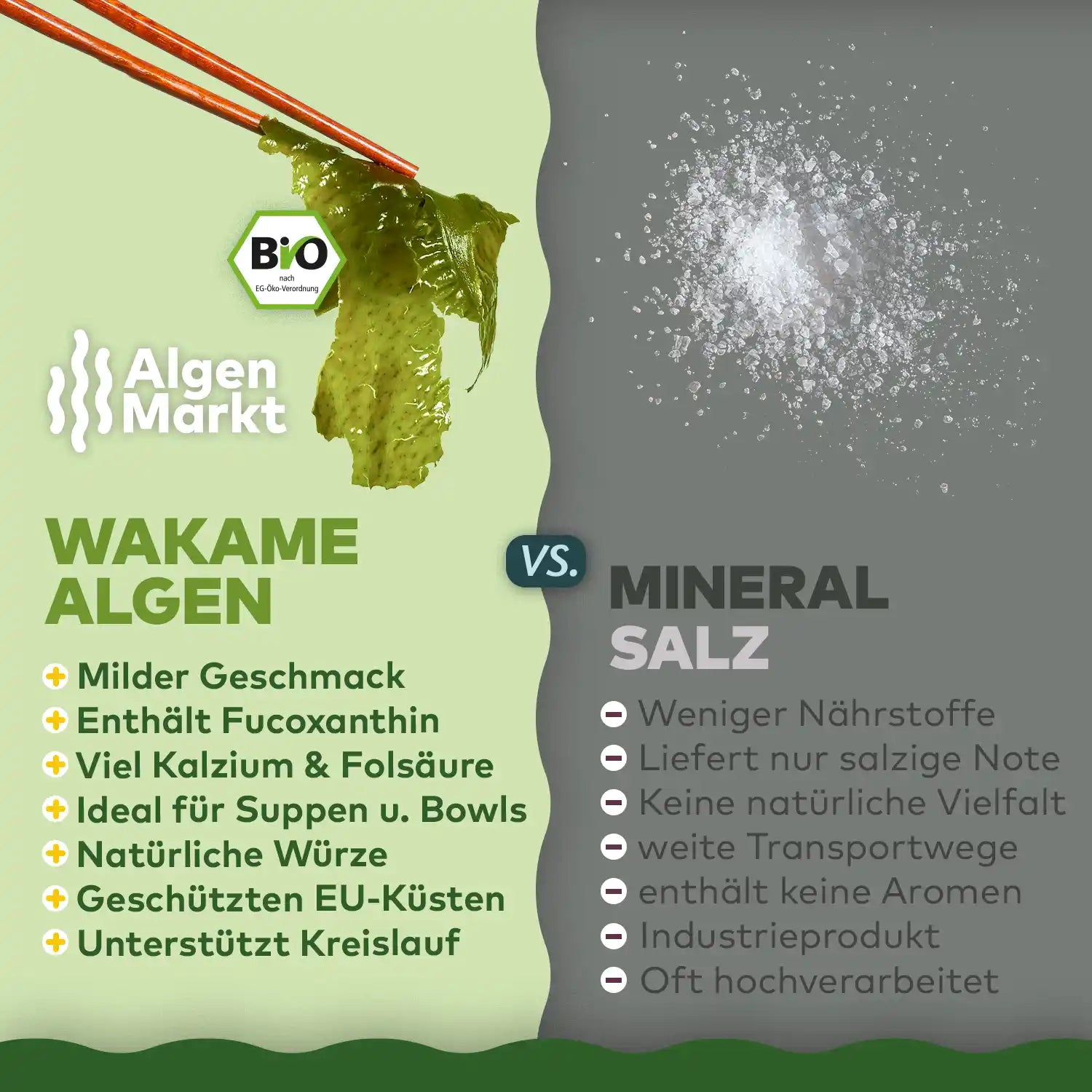
Ideal for seaweed salads, miso soups or as a natural umami seasoning

Wakame leaves – organic brown algae from Brittany
What is wakame seaweed?
Wakame (Undaria pinnatifida) is an edible brown seaweed originally from the Pacific region and has been a part of Japanese cuisine for centuries. Today, it is also sustainably cultivated in Europe – particularly in Brittany.
Its tender, green leaves and mildly sweet taste make wakame ideal for soups, salads and Asian dishes .
Where do our wakame leaves come from?
Our wakame comes from controlled organic harvesting in Brittany (France) .
- Breeding on ropes in the sea for two years
- Gentle hand harvesting & drying
- Naturally clean water thanks to a strong current
- Each batch is laboratory tested for iodine, heavy metals & microbiological contamination
What nutrients are found in wakame?
Wakame is a nutrient-rich superfood:
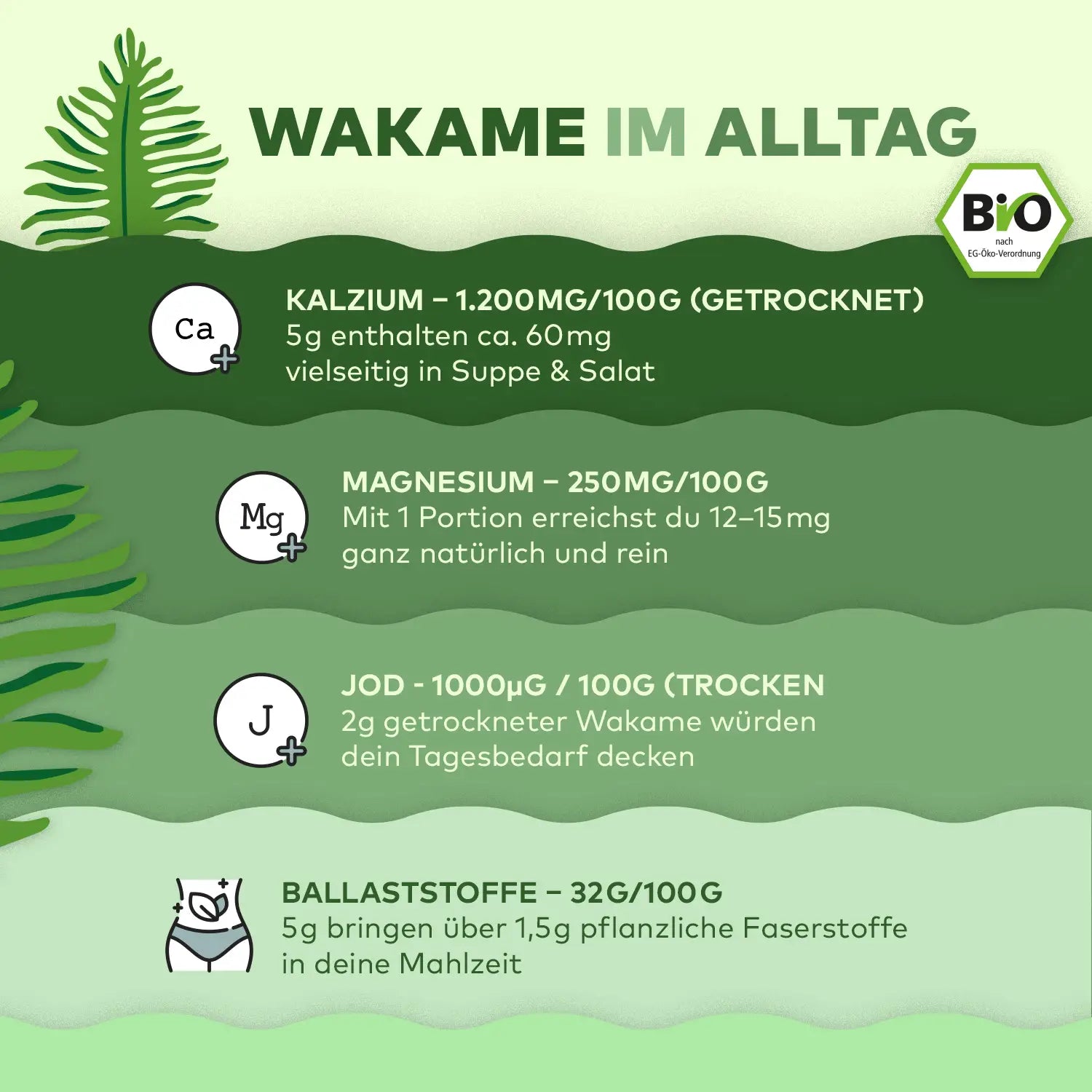
- Rich in fiber, calcium, magnesium & iron
- Contains vitamins A, C, E & fucoxanthin
- High sodium alginate content – a natural component of brown algae
It is low in calories, easily digestible and contributes to mineral intake.
Dried or fresh – what's the difference?
Dried wakame is easy to store, has a long shelf life, and develops its delicate texture and fine sea aroma after soaking.
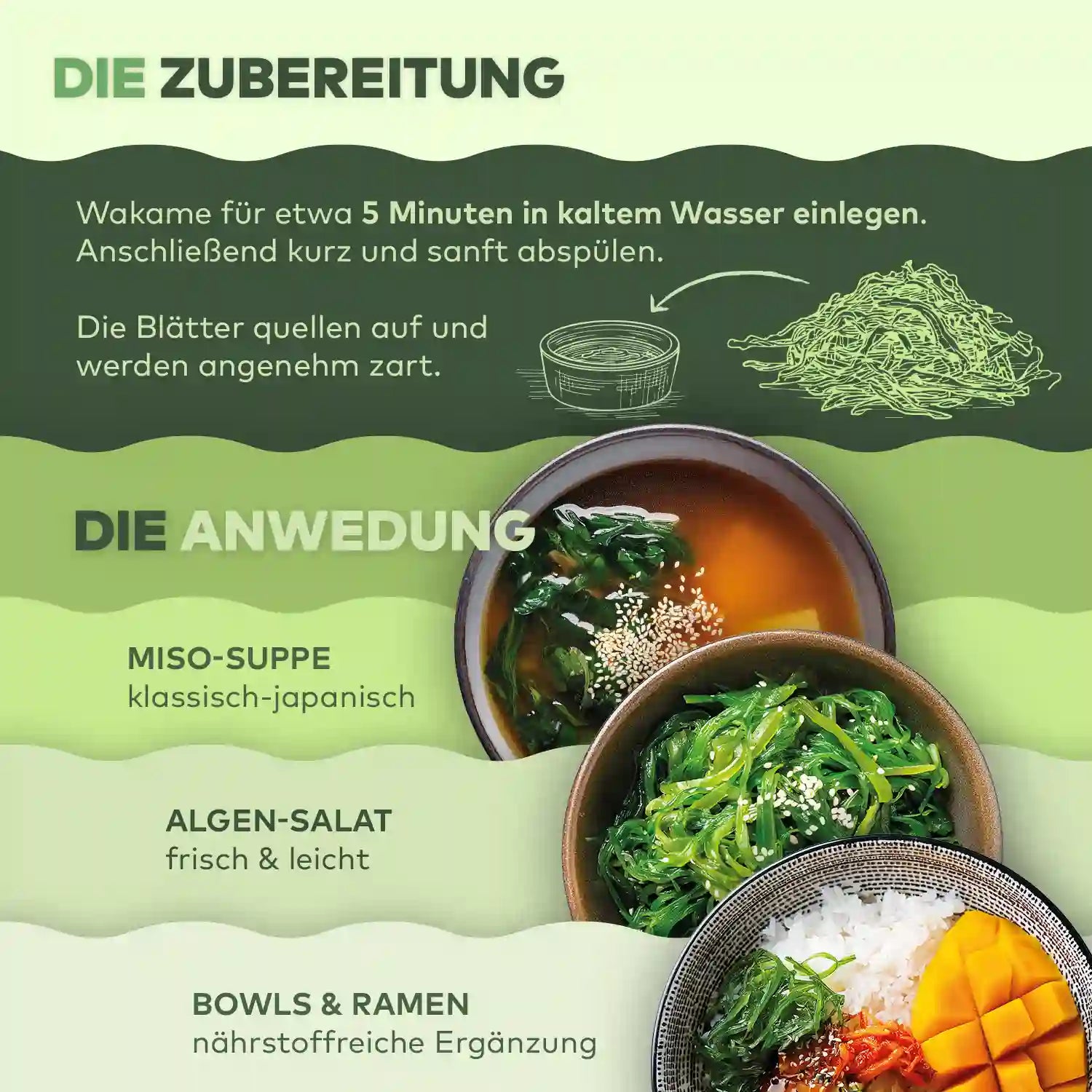
- Soaking time: approx. 10 minutes in cold water, then rinse briefly if necessary.
- Then enjoy raw or lightly cooked.
How do you use wakame in cooking?
- Classically in miso soup with tofu
- As a seaweed salad with cucumber and sesame seeds
- For use as a filling in sushi rolls
- Fried noodles with vegetables
- As a spicy side dish with soy sauce, ginger or wasabi
The leaves can be eaten raw or cooked and harmonize particularly well with Asian spices and roasted sesame seeds.
How long do wakame leaves keep?
- Unopened : minimum 24 months in airtight and lightproof packaging
- Once opened : consume within 12 months
➤ Store in a cool, dry, and dark place
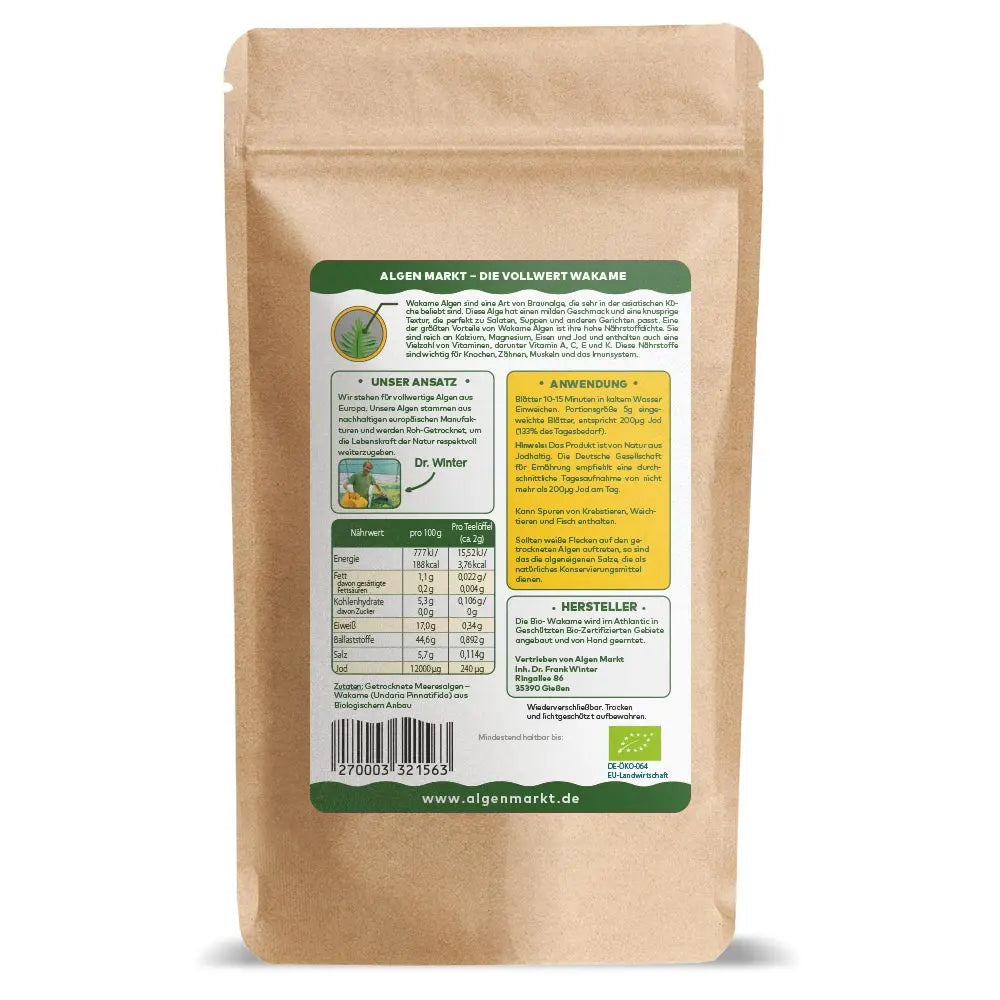
| Angabe | pro 100 g | pro 2 g |
|---|---|---|
| Brennwert | 777 kJ / 188 kcal | 15,5 kJ / 3,8 kcal |
| Fett gesamt | 1,1 g | 0,02 g |
| davon gesättigte Fettsäuren | 0,2 g | 0,004 g |
| Kohlenhydrate | 5,3 g | 0,11 g |
| davon Zucker | 0 g | 0 g |
| Protein | 17,0 g | 0,34 g |
| Salz | 5,7 g | 0,11 g |
| Ballaststoffe | 44,6 g | 0,89 g |
| Jod | 10.000 µg | 200 µg |
| Jod-Hinweis: 2 g Wakame entsprechen ca. 200 µg Jod, also rund 133 % des Nährstoffbezugswerts (NRV) für die tägliche Zufuhr gemäß Lebensmittelverordnung. | ||
Hinweis zum Jodgehalt: Aufgrund des natürlichen Jodgehalts die angegebene maximale Verzehrmenge beachten. Personen mit Schilddrüsenerkrankungen sollten vor dem Verzehr ärztlichen Rat einholen.
Recipe Ideas
-

Wakame Kartoffelsalat mit Apfel & Algen Rezept
Veganer Kartoffelsalat mit Wakame Algen, knackigem Apfel und würzigem Senf-Dressing...1 min read -

Dulse Tomaten Butter mit Algen – veganes Rezept
Cremiger veganer Brotaufstrich aus Sonnenblumenkernen, Tomaten und Dulse-Algen – herzhaft,...1 min read -

Spirulina Erbsen Creme mit Algen Rezept
Cremiger veganer Aufstrich aus Erbsen, Spirulina-Algen und Chiasamen – frisch,...1 min read -

Wakame Gurken Apfel Salat mit Algen Rezept
Knackige Gurke, fruchtiger Apfel und würzige Wakame-Algen treffen auf ein...1 min read -

Dulse Sonnenblumen Aufstrich – Veganer Brotaufstrich mit Algen Rezept
Cremiger veganer Aufstrich aus Sonnenblumenkernen und Dulse-Algen – schnell zubereitet,...1 min read -

Cremige Champignon-Pasta mit Algen – Veganes Rezept
Herzhafte Pasta mit goldbraunen Champignons, cremiger Tofusauce und Spirulina-Öl –...1 min read


